Nathan
Happiness for BeginnersNathan is Helen’s lost brother, drowned at eight after going alone to the docks at a lake where the family was visiting friends. His death remains more than a childhood tragedy in Helen’s account: it becomes the center of her guilt, her mother’s collapse, and her mistaken belief that Duncan’s birth made him responsible for the family’s later pain. As Helen begins to speak of Nathan and eventually learns more about what followed his death, she can remember him without making his younger brother stand in his place.
Identity and Loss
Helen identifies Nathan as the brother she lost, distinct from Duncan, the brother she has continued to see. He died when she was nine, while still a child himself. In her recollection of him at the age of eight, he has knobby knees and red sneakers, an image that makes his absence vivid without turning him into an adult-shaped memory. Nathan remains a particular boy to Helen: restless enough to want to run around the marina docks, and young enough to depend on his sister’s answer when he asked her to go with him.
The circumstances of his death leave Helen with a lasting sense of responsibility. At a lake house belonging to her parents’ friends, the adults were drinking while Helen and a large group of children were supposed to watch a movie. Nathan begged her to take him to the marina. She refused because she wanted to stay for the movie; he went by himself without telling the others and drowned. Helen later recalls that she cannot remember what movie they were watching. She has sometimes imagined contacting the other children who were there to ask whether any of them remember, but has never done so, and the missing detail remains an unanswered question in her life.
Grief and Family Aftermath
Helen’s grief is bound up with a counterfactual she cannot release: she believes she should have gone with Nathan. Jake points out that she was only nine, and Helen recognizes that a child could not have controlled what happened. Knowing that regret cannot alter the past does not make her stop carrying it. The sense that she ought to have acted differently has become, in her mind, a measure of loyalty to her brother: letting go can feel like failing to honor him.
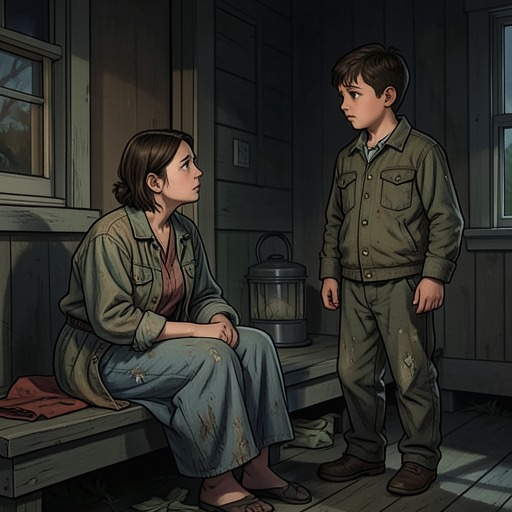
After Nathan’s drowning, Helen’s mother became frantic, searching even after he had been found in the water and continuing to wake at night and pace through the house. Two months later, she was pregnant. Helen believes the pregnancy may have been an attempt to replace Nathan, but also understands the impossibility of replacing him. Nathan’s death and Duncan’s later birth consequently become entangled in Helen’s childhood understanding of what went wrong. Her parents separated within a year; her father moved to San Diego and remarried, while her mother remained in Evanston with Helen and Duncan. The household struggled with unpaid bills and interrupted water and power, piles of laundry, missed meals, and a neglected yard and pool. Helen tried to help by folding clothes and learning to heat soup and make grilled cheese. Not long after she turned thirteen, her mother drove the children to Grandma GiGi’s and left them there.
The Brother Helen Blamed
For years, Helen attached the family’s unraveling to Duncan. In her childhood account, Nathan died, Duncan arrived, their father disappeared, their mother became increasingly overwhelmed, and Helen herself felt forgotten. She resented having to care for Duncan and treated his existence as the reason her life had changed. Only when she speaks openly with Jake does she articulate the underlying injury: she has not forgiven Duncan for not being Nathan. The admission reveals that her hostility toward Duncan was not simply irritation with a younger sibling; it had become a way to preserve her grief and direct blame away from a loss she could neither undo nor explain.
Helen’s later conversation with Duncan changes the meaning of that family history. Duncan has believed that their mother left because he was difficult as a child. Helen tells him that his crying over Softie, his comfort blanket, led Grandma GiGi to return home for it. There, GiGi found their mother after she had taken painkillers and gone to bed with Nathan’s teddy bear. GiGi found her in time. The detail makes Duncan’s childhood distress part of the chain that saved their mother, rather than evidence that he caused her departure. It also links Nathan’s memory to the crisis that had remained hidden from both siblings: their mother was still holding his teddy bear when GiGi found her.
GiGi had not told Helen what happened that night. She explained that Helen was a grieving child already carrying too much, with her father gone and Nathan’s death still weighing on her. When GiGi returned from the hospital, Helen was asleep on the sofa in her clothes and Duncan was in bed. GiGi believed the truth was not hers to place on that child. Learning it as an adult allows Helen to tell Duncan what GiGi had concealed, and gives the siblings a fuller account of their mother’s departure and Duncan’s place in the family story.
Memory and Meaning
Nathan returns to Helen not only through guilt and family explanations but also through an unexpectedly peaceful memory. During a rest day in the meadow, Helen lies on a sun-warmed rock and imagines Nathan there as an eight-year-old, skittering through long grass in his red sneakers or heading toward the riverbank. She thinks he would have loved the place. For a moment, she can almost imagine him nearby, just out of sight. The image brings tears, but the surrounding beauty and quiet keep the moment from becoming only an episode of sorrow; she feels close to him while also experiencing tranquility she says is unfamiliar to her.
That day becomes attached to an ordinary poem she used to read to her first-grade pupils, “The Ballad of the Boneless Chicken.” The poem recalls her own boneless, relaxed pose on the rock, and she realizes that reading it later will bring this particular day back to her. Nathan’s memory is thus carried not only by the painful question of what Helen should have done, but also by a landscape, an imagined version of his childhood self, and a small piece of her working life. His significance to the story lies in how these forms of remembering change: Helen can keep Nathan irreplaceable without treating Duncan as his substitute, or as the cause of everything that followed.